Woven - out now!

So happy to be able to finally announce that my debut album, Woven, is out now. Available from my web shop, bandcamp, iTunes and Edinburgh's Coda Music. You can listen to it in full on soundcloud, too.

Special thanks to everyone involved in making it:

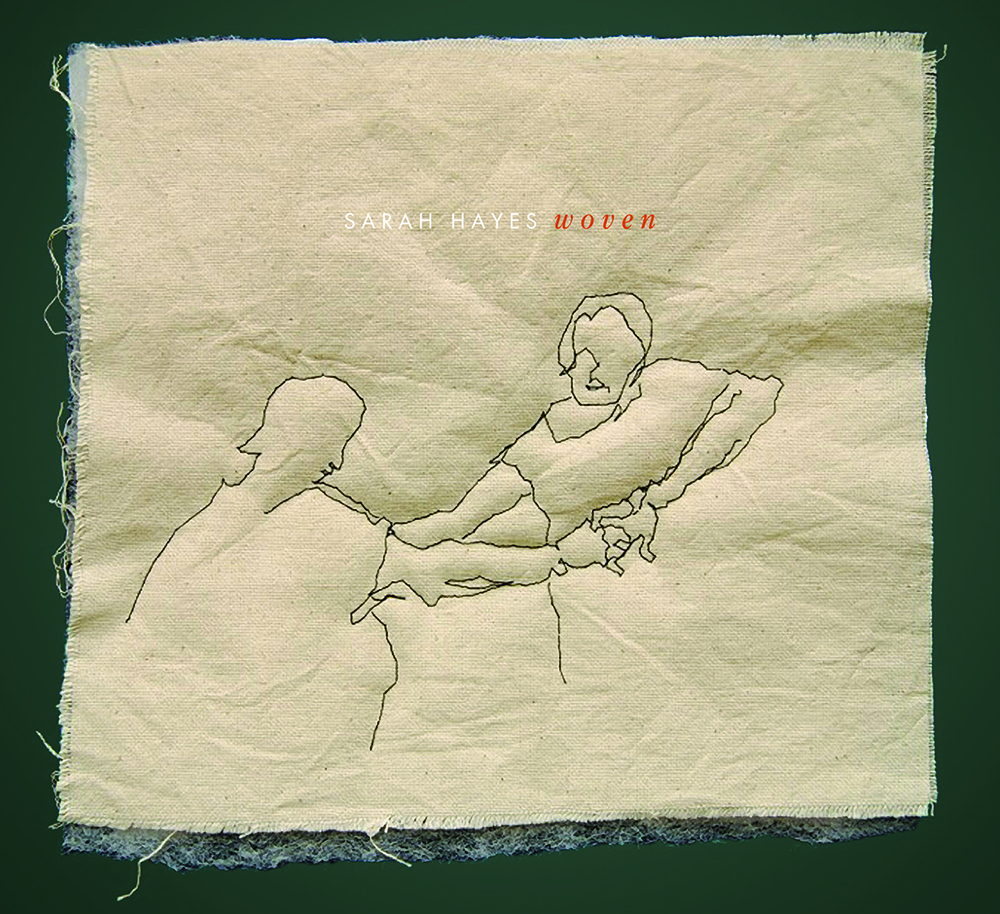
The band - Fiona MacAskill, Mairearad Green, Ali Hutton, James Lindsay, Phil Hague. Engineers Iain Hutchison and Angus Lyon. Georgie Meadows for the album cover image, photography by Gemma Dagger, design by Fourtwentyseven. Celtic Connections for the original commission and Help Musicians UK for supporting the recording project.

A big thank you also to everyone who's listened and pre-ordered so far! 


Folk Radio UK and fRoots

I'm thrilled that Woven is a featured album of the month at Folk Radio UK:

'What impresses most about ‘Woven’ is Sarah’s skill as an arranger; an interpreter of song, story and music. In taking these snatches and fragments of traditional song, adding her own intricate and fascinating musical themes and merging them into a narrative on the fleeting but complex nature of human existence, she has created an utterly compelling tapestry.'

Read the rest of Neil McFadyen's review here.

fRoots Magazine have also had lovely things to say. In the December issue, I talk to Tim Chipping about multi-tasking and how Woven came to be, and the album is reviewed by Paul Matheson.


fRoots is available in newsagents or direct from their website.


Woven track by track (continued)

Sair Fyel'd Hinny

Here's another track from Woven. This is a very old Northumbrian song that I'd been aware of for many years but never tried singing until this project came along! An old man talks to an oak tree, lamenting his lost youth. As the tree ages, it gets bigger and stronger, where the man is becoming more feeble.

Thanks also to Roddy Hart for giving the song a spin on his BBC Radio Scotland show last night.


Woven track by track (continued)

Over on my Facebook page I've been sharing some background information about some of the music from Woven. Here's an update with the two most recent posts...

Deep In Love/The Daffodil/Greenwood Laddie

This set begins with a very well-known song, Deep In Love. The words will be recognisable to lots of you; it shares 'floating verses' with the likes of The Water Is Wide and Waly Waly. Then we go straight into a jig which I've named The Daffodil. The tune is about new beginnings, and the title links with one of my favourite memories of Warkworth, the village I grew up in. Every spring, the hill below the castle is carpeted in these flowers - if anyone I know has any photos of this, feel free to share them here! After that comes an Irish song, Greenwood Laddie, with bits of the jig tune winding through it.


Four Loom Weaver

Widely thought to originate in Lancashire, it's a song about extreme poverty and hardship, taking up a similar thread (sorry!) to the Jute Mill Song - hard work for little gain, a daily struggle for basic needs, and anger at the powers that be. I kept the original melody for this one.  Thanks also to Max Reinhardt for playing it on BBC Radio 3's Late Junction last week. Catch up here: http://www.bbc.co.uk/programmes/b06j14rp (50'30)


Georgie Meadows

The image on Woven's cover is a piece by Georgie Meadows, taken from her Stitched Drawings series. I discovered it whilst searching for artwork relating to dementia, and thought it was a perfect fit for the music and its overarching theme. I'm very grateful to her for allowing me to use it. Here are Georgie's words about her work: 

"I spent many years working as an Occupational Therapist specialising in mental health, and for the last 14 years working with elderly people coping with mental and physical difficulties as well as a diminished role in our society. I was always making and drawing in my spare time but in 2003 I took ten months off work to do an Art Foundation course at Hereford College of Art and Design, where I began experimenting with the translation of pencil drawings of the people I worked with into machine stitch on fabric. I returned to work but two years later retired from Occupational Therapy to concentrate on my art practice.

To offer good compassionate care, indeed to simply care for each other we need to be able to see each person as a unique individual. This is often made difficult by people’s inability to make logical verbal communication. But so much communication is visual rather than verbal. Sight is such a powerful sense: we spend so much time making fast decisions based on what we see. Looking and seeing can make us more informed and more creative in what we do, but it can also mislead – especially when loss of identity and control are involved.

I always felt that the importance of the imagination – how we interpret what we see when caring or just being with people – is neglected. I try to use my images to practise ‘looking’ in a more reflective way, to try to avoid hasty assumptions or categorising. I have also found them useful teaching aids for those working in the caring professions. I hope to encourage empathy and inclusion as well as to celebrate the courage of those older people who find life a struggle.

None of these images is intended as a portrait of a specific individual."